



You show proactivity as a job seeker or young professional by taking the initiative before you are even asked—whether that means researching a company thoroughly before an interview, teaching yourself a new skill, or spotting a problem at your new job and proposing a smart solution. Instead of passively waiting for step-by-step instructions, proactive employees take ownership of their growth and actively seek out ways to make their team’s life easier. In short, modern employers are actively searching for candidates who demonstrate real proactivity.
Whether you are hunting for your entry-level job, collaborating with remote teams, or searching for your next step in a multilingual career on Europe Language Jobs, understanding how to cultivate a proactive mindset will make you stand out from the crowd immediately.
Let’s dive into what proactivity actually means, why top companies value it so deeply, and how you can demonstrate it in your daily work.
1. What is proactivity?
2. Why organizations value proactivity?
3. How do you demonstrate proactivity at the workplace?
4. Proactivity means to be solution-oriented
5. Proactivity means to prevent problems
6. Proactivity means active involvement
7. Proactive behavior at work
8. Frequent Asked Questions
What is proactivity?
At its core, proactivity is the practice of taking control of situations by causing things to happen rather than waiting to respond after they occur. Instead of simply acting when you are asked to perform a task, proactive professionals look ahead, anticipate upcoming needs, and take action voluntarily.
Being proactive does not mean overstepping your boundaries or ignoring management directives. Rather, it is about ownership and forward thinking. A reactive worker waits for instructions when an unexpected issue arises; a proactive worker identifies the bottleneck early, proposes a constructive solution, and takes the initial steps to resolve it.
When you develop a proactive mindset, you stop treating your daily tasks as a simple checklist. Instead, you view your role as an opportunity to add tangible value, improve internal workflows, and help your entire company succeed.
Why organisations value proactivity?
There is a direct link between proactive team members and overall business growth. In fast-paced industries, especially in international environments where teams collaborate across different time zones, managers simply do not have the time to micromanage every single workflow.
When companies hire proactive employees, they gain several major advantages:
-
Faster Innovation: Proactive workers consistently test new ideas, suggest smarter tools, and refine existing processes without waiting for top-down orders.
-
Better Risk Management: By anticipating potential bottlenecks, proactive staff prevent minor issues from turning into major operational crises.
-
Higher Team Morale: Taking initiative inspires colleagues, fosters trust, and creates an energetic work culture where everyone feels empowered.
Ultimately, organizations value proactive team members because they drive progress organically. When individuals take responsibility for their own personal output and continuous development, overall organizational performance increases significantly.
How do you demonstrate proactivity at the workplace?
Demonstrating initiative isn't about making grand gestures; it shows in the daily habits you build at work. Here are three core pillars that reflect proactive behaviour in any modern workplace environment. 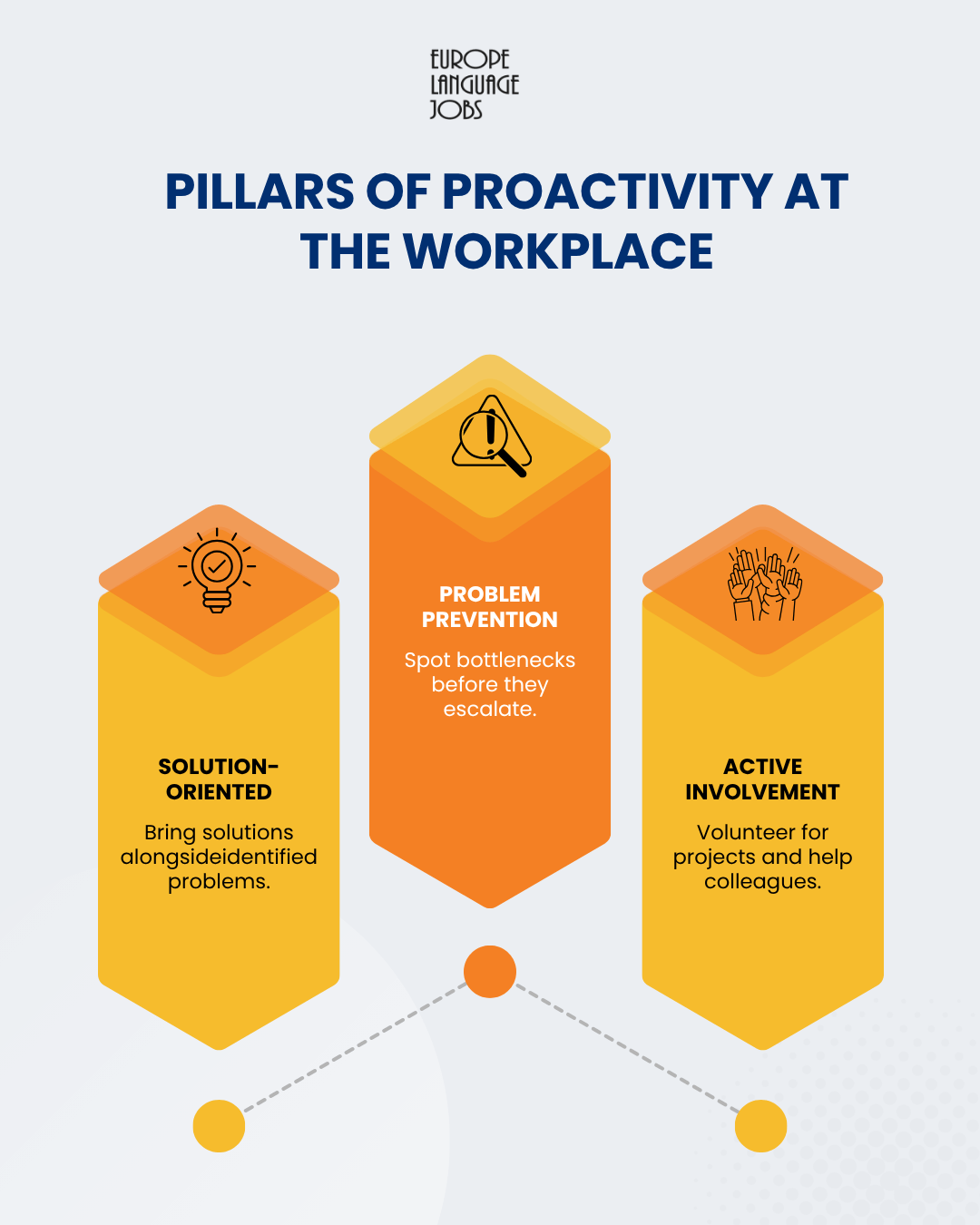
Proactivity means to be solution-oriented
Anyone can point out a flaw or complain about a messy process. A proactive professional, however, never brings a problem to their team leader without also bringing at least one potential solution.
If you notice that client onboardings are taking too long, don't just report the delay. Spend a few minutes analyzing where the hold-up occurs, write down a revised workflow proposal, and present it to your manager. Even if your exact solution isn't implemented, you demonstrate critical thinking and true ownership over your work.
Proactivity means to prevent problems
Reactionary working means constantly putting out fires. Proactivity, on the other hand, focuses on fire prevention.
To practice this, step back from your day-to-day routines regularly and evaluate upcoming milestones. Ask yourself:
-
What challenges could arise during our upcoming project launch?
-
Do we have the necessary resources and budget allocated in advance?
-
How can we streamline communication across different departments?
By identifying potential hazards early, you save valuable time, protect team resources, and ensure smoother executions.
Proactivity means active involvement
Proactivity requires active engagement with your broader team and company culture. It means speaking up during team meetings, offering constructive feedback, and volunteering to lead new initiatives.
If you finish your assigned tasks early, don't just sit back and wait for your next assignment. Reach out to a colleague who might be overwhelmed, ask how you can assist with ongoing department goals, or take time to master a new tool or language skill that will benefit your team long-term.
Proactive behavior at work
Adopting proactive behaviour also means mastering personal time management and optimizing your day-to-day work routines. Taking initiative requires mental clarity, which is impossible to achieve if you are constantly overwhelmed by disorganization or missed deadlines.
By organizing your schedule efficiently, you free up the mental bandwidth required to think strategically, innovate, and support your team proactively.
Frequent Asked Questions
What are the best productivity apps to enhance proactivity in the workplace?
To stay ahead of your workload and maintain consistent productivity, using the right digital tools is essential. A robust task management application like Asana or Trello allows you to map out project timelines, set personal goals, and track progress transparently.
In modern digital workplaces, specialized software solutions help individuals and teams organize their day effectively. Relying on reliable time tracking software enables you to monitor how much time you devote to specific tasks throughout the week. When you use dedicated software to track time, you gain valuable insights into your daily workflow patterns. This helps you identify personal time-wasters, optimize your daily schedule, and ultimately boost productivity.
Using a high-quality tracking software makes it much easier to balance routine responsibilities with proactive development projects.
Employee monitoring - how is proactivity measured?
Measuring initiative can be complex, but modern companies frequently utilize structured metrics and digital solutions to evaluate how employees work. Through goal-tracking platforms and modern employee monitoring systems, managers can assess individual output, initiative, and overall efficiency.
However, effective employee monitoring should never be about invasive micromanagement. When managers need to manage teams across different countries, adopting clear digital tracking tools helps maintain accountability and transparency across all departments.
Using specialized time tracking solutions provides accurate data on project completion rates, helping team leaders recognize proactive contributions in a fair-minded way. Transparent tracking systems give managers clear visibility into operational efficiency, allowing them to reward team members who consistently go above and beyond. Ultimately, healthy tracking practices aim to support employee productivity, streamline workflows, and foster trust between management and staff.
How can job seekers highlight proactivity when applying for multilingual roles?
If you are applying for international roles on Europe Language Jobs, showing proactivity during the hiring process can help you stand out immediately.
Instead of simply listing past responsibilities on your CV, focus on achievements where you took personal initiative. Use active phrasing such as "initiated," "developed," or "implemented" to describe your work history. During interviews, share concrete examples of times you identified a problem, created an action plan, and delivered measurable results without waiting for explicit instructions.
_____________________________________________________________________________
Feeling inspired to kickstart your next adventure? Explore more career advice, job search strategies, and expat insights on the Europe Language Jobs blog.
Our content is crafted by an international team of expats, multilingual professionals, and career experts who understand the excitement and challenges of moving abroad. We understand exactly what it takes to land your dream role in Europe!